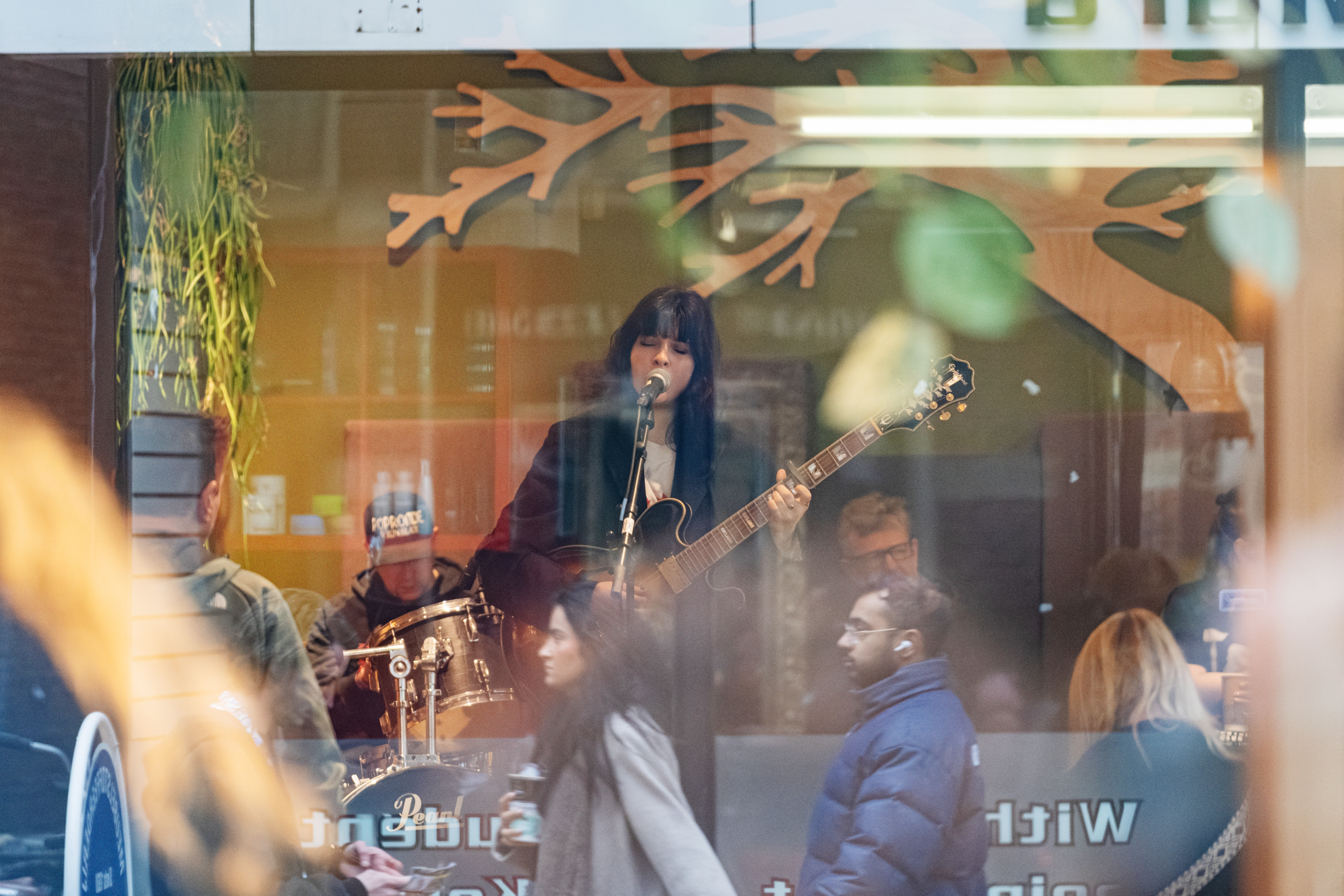
The value of music goes far beyond atmosphere alone. That was the key message of the international research programme MUSIC360 Living Labs — and yesterday, that message was heard loud and clear for the first time.
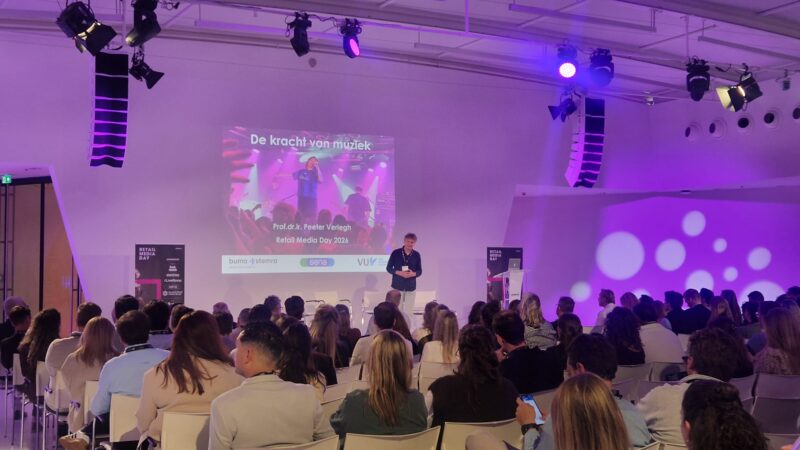
During Retail Media Day (19 May 2025, Jaarbeurs Utrecht), Peeter Verlegh, Professor of Marketing at Vrije Universiteit Amsterdam, presented the retail findings of the study to an audience full of industry experts from companies including Heineken, bol, MediaMarkt and Albert Heijn. It marked the official launch of the public release of this extensive international research project — a study to which BumaStemra, together with Sena, Vrije Universiteit Amsterdam and other European partners, actively contributed.
MUSIC360 Living Labs is one of the largest and most multidisciplinary studies into the value of music in society, funded by the European Union. The research was carried out by Vrije Universiteit Amsterdam (VU), Universitat Politècnica de València (UPV), IMRO (Ireland), BMAT (Spain), GDA (Portugal), GTM (Finland), Aepo-Artis, The Value Engineers, Sena and BumaStemra.
Extensive research was conducted into the use of music in retail and hospitality environments. By measuring real-life situations over several months, the study paints a remarkably clear picture: music influences not only how we shop, work and relax, but even how we recover, connect and remember.
Music noticeably elevates the workplace
Multiple studies conducted across different countries show that music has a clear impact on employees. In Dutch retail stores, slower music led to a calmer atmosphere, improved concentration and a noticeably more positive mood among staff. In Finland, these findings were confirmed once again: stores playing familiar, licensed music saw employees with higher energy levels, better moods and a greater appreciation of their working environment compared to stores using royalty-free or generic AI-generated tracks.
In hospitality, music is a strategic force
Music shapes which customers walk in, how long they stay, and how intensely they experience a venue. By carefully aligning music with the time of day, target audience, crowd levels and brand identity, hospitality businesses can create a consistent and positive guest experience — while also influencing dwell time and spending behaviour.
The importance of music for retail employees
In the Netherlands, 149 retail stores alternated between slow, medium and fast-tempo music over several weeks. The results showed that tempo had only a limited positive effect on sales among loyalty card holders, but a strongly positive impact on employee experience and satisfaction.
For both hospitality and retail, the evidence is compelling: music shapes employee energy, customer and guest experience, and ultimately the success of day-to-day operations. These findings are especially relevant at a time when more and more businesses are experimenting with AI-generated music as a cheaper alternative. However, the research shows that such music does not create the same emotional impact on employees and visitors, and may even risk making the atmosphere feel impersonal or inconsistent. For experience-driven sectors, that is a crucial insight.
International collaboration
The MUSIC360 Living Labs programme was carried out by Vrije Universiteit Amsterdam (VU), Universitat Politècnica de València (UPV), Irish Music Rights Organisation (IMRO), BMAT, GDA Portugal, GTM Finland, Audiogest, AepoArtis, Sena and BumaStemra.